Wildflower Boho Embroidery Design Review
A First Look: Light, Lyrical, and Purposefully Minimal
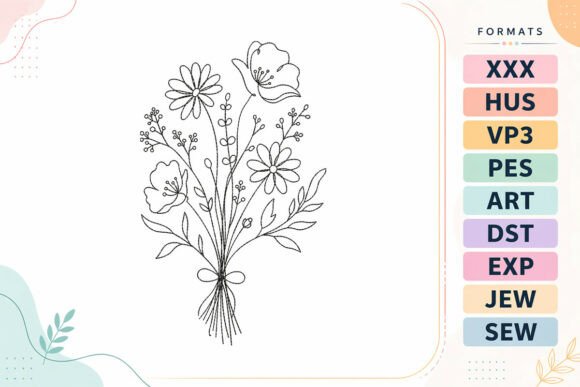
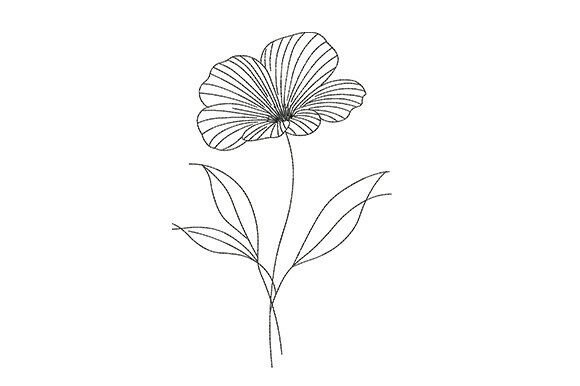
As someone who’s digitized and stitched over 300 floral motifs for client projects — from boutique aprons to Etsy baby blankets — I opened the Wildflower Boho Embroidery Design file expecting something delicate but intentional. What stood out immediately wasn’t just its outline style, but its rhythmic flow: slender stems curve with quiet confidence, petals taper without stiffness, and negative space breathes around each bloom. This isn’t a dense fill-stitch garden — it’s an Outline Flowers design built for elegance, not coverage. It reads as modern boho: unfussy, organic, and quietly confident. That makes it ideal for projects where subtlety supports storytelling — think a linen pillow cover for a nursery, or a minimalist tote bag for a small-batch herbal tea brand.
Real-World Stitch-Out Performance: Where It Shines (and Where to Pause)
I tested the Wildflower Boho Embroidery Design across five fabric types: midweight cotton twill (tote bags), brushed cotton fleece (sweatshirts), terry cloth (kitchen towels), 100% cotton poplin (aprons), and lightweight stretch jersey (baby onesies). On stable, medium-weight fabrics like twill and poplin, the stitch-out was consistently clean and precise — no thread breaks, no puckering, even at moderate speeds. The running stitch and satin stitch transitions felt balanced, with enough stitch density to hold shape without overwhelming the ground fabric.
On stretchy jersey, however, I adjusted my approach: tighter hoop tension, tear-away + cut-away stabilizer combo, and reduced machine speed. Even then, the thinnest stem lines (under 1.2mm) showed slight waviness — not a flaw in the Wildflower Boho Embroidery Design, but a reminder that outline-based embroidery files demand thoughtful stabilization on unstable substrates. For caps or curved surfaces, I’d recommend testing on a scrap cap front first — the design’s gentle curves translate well, but tight crown areas may compress fine details unless you reduce scale slightly or reposition thoughtfully.
Dark fabrics? Excellent contrast potential — especially with ecru, oatmeal, or charcoal thread. But I did notice that on deep navy or black, the finest outlines softened visually in final product photos. A quick test on scrap fabric with your intended thread colors is non-negotiable here. And while this isn’t an applique design, its open structure invites layering: try stitching it first, then adding a single leaf or bud in a contrasting satin stitch — a subtle upgrade that elevates handmade presentation without complicating production.
Commercial Use & Product Value: More Than Just a Pretty Outline
For Etsy sellers and small-batch creators, the Wildflower Boho Embroidery Design delivers quiet versatility. It works seamlessly across categories: as a centered motif on a kitchen towel, scattered along a sweatshirt hem, or clustered on a patch-ready backing for iron-on embroidery patches. Because it’s light on stitch count and avoids heavy fill areas, turnaround time stays low — critical when fulfilling custom apparel orders or craft fair pre-orders.
More importantly, it supports brand consistency. Its cohesive line weight and botanical rhythm let you pair it with complementary fonts or simple monograms without visual competition. I used it on a set of linen napkins for a wedding client — the result felt curated, not mass-produced. That perception directly impacts buyer trust and perceived value. Customers notice when stitching feels intentional, not algorithmic. This Creative Fabrica embroidery file supports that intentionality.
For digital product sellers, it’s also strong as a design asset in printable mockups. Its clean lines render crisply at multiple sizes, making it easy to showcase on lifestyle templates — whether styled on a ceramic mug, woven basket, or sunlit windowsill. That visual flexibility helps convert browsers into buyers, especially for handmade gift listings where atmosphere matters as much as function.
Practical Notes Before You Stitch
- Always test on scrap fabric — especially if using textured, dark, or stretchy materials. Stitch density and line clarity shift subtly across substrates.
- Confirm hoop size before loading. While the design fits comfortably in a 4x4 hoop, verify exact dimensions on the Creative Fabrica product page — some variations include alternate layouts.
- Match stabilizer to end use. For items that will be washed frequently (baby blankets, kitchen towels), opt for a lightweight cut-away. For one-time-use gifts or wall hangings, tear-away works beautifully.
- Inspect small details post-stitch. Tiny buds or stem endpoints may need light trimming or re-hooping for perfect definition — particularly on dense weaves.
- Review licensing terms on Creative Fabrica before selling finished products. This is a digital embroidery file, and commercial use rights vary by seller — always double-check before listing embroidered tote bags or personalized gifts.
Final Thoughts for the Working Embroiderer
The Wildflower Boho Embroidery Design won’t replace your go-to fill-flower motif — and it’s not meant to. Instead, it fills a specific, valuable niche: the need for breathable, elegant, low-bulk botanical detail that enhances rather than dominates. It performs reliably on common apparel and home goods fabrics, scales gracefully across product types, and supports both handmade authenticity and professional polish. If your workflow includes custom apparel, embroidered patches, nursery decor, or seasonal handmade gifts, this Embroidery file earns its place in your active library — not as filler, but as a refined, repeatable accent that customers remember for its quiet confidence.
It’s the kind of design that makes clients say, “I love how light it feels — like it belongs there.” And in embroidery, that’s the highest compliment.