Scandinavian Floral Folk
A Designer’s First Look: Playful, Rooted, and Ready for Real Projects
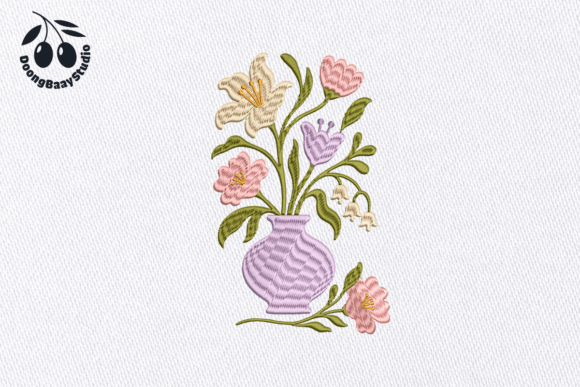
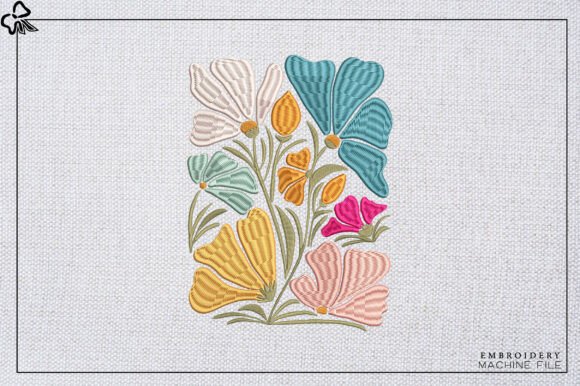
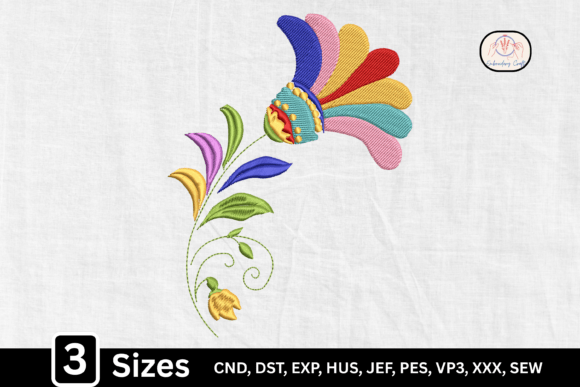
When I opened Scandinavian Floral Folk in my embroidery software, I didn’t just see a flower—I saw a mood. Light, grounded, quietly joyful. It’s not fussy or overly botanical; it’s folk-inspired in the truest sense: simplified shapes, rhythmic curves, and intentional asymmetry that feels hand-drawn rather than algorithmically generated. The layout leans into Scandinavian restraint—no overcrowding, no filler vines—just one confident bloom with supporting leaves and subtle stem movement. That makes it instantly adaptable: not a background filler, but a focal point with personality.
Where This Design Truly Shines (and Why Your Customers Will Notice)
I recently tested Scandinavian Floral Folk on a natural linen tote bag destined for a local boutique’s spring collection. The result? A quiet confidence customers responded to immediately—not because it shouted, but because it felt *considered*. That’s the value here: this isn’t just another floral machine embroidery design. It reads as intentional design, not decorative afterthought.
- Custom apparel: On a cream cotton sweatshirt, the clean lines held up beautifully—even at 4.5" wide. No bleeding, no puckering. The stitch density felt balanced: enough fill stitch to read clearly from across a room, but light enough to avoid stiffness on midweight knits.
- Baby embroidery & nursery decor: Stitched onto organic cotton swaddle fabric (with tear-away + light cutaway stabilizer), the design retained softness while staying legible. Parents appreciate subtlety—and this avoids the cutesy overload common in baby embroidery.
- Embroidered patch & apron accents: Because the outer edges are smooth—not jagged or ultra-fine—the design pressed cleanly and fused well onto twill patches. On a chef’s apron, it added craft credibility without competing with function.
- Holiday embroidery & personalized gifts: Paired with muted gold thread on deep navy tea towels, it read as modern heirloom—not seasonal gimmick. That versatility matters when you’re curating small shop product lines or Etsy listings.
Where to Pause—and Test Twice
Scandinavian Floral Folk is forgiving, but not magic. Here’s where real-world caution pays off:
- Small hoop sizes (under 4"): The central bloom has gentle detail—petal contours, leaf veins—but nothing micro. Still, if you’re pushing below 3.5", inspect the inner fill stitch in your software. Some areas may compress into solid blocks on tiny scales.
- Textured or stretchy fabric: On terry cloth towels or lightweight jersey, I added medium-weight cutaway stabilizer beneath + topping (like Sulky Tender Touch) on top. Without it, the satin-stitch petals lost definition against the nap.
- Dark fabric backgrounds: The design relies on shape and rhythm more than contrast—but if you’re using pale thread on black denim or charcoal fleece, test thread color first. A single tone shift (e.g., ivory instead of white) lifts it dramatically.
- Curved surfaces (caps, curved pillow covers): The stem flows naturally, but avoid placing the full design across a severe curve—center the bloom, let the stem taper toward the seam. It maintains integrity better that way.
What This Design Says About *Your* Work
Using Scandinavian Floral Folk does more than decorate—it signals taste. When stitched cleanly on a handmade product, it tells buyers: “This wasn’t rushed. This was chosen.” That builds trust faster than any description. For Etsy sellers and craft fair vendors, that impression directly affects perceived value—and willingness to pay a premium.
It also supports brand consistency. Unlike busier florals, this design breathes. It leaves space for your logo, monogram, or other elements—ideal if you’re building cohesive design assets across tote bags, tea towels, and baby blankets. And because it’s rooted in folk tradition—not trend—it won’t feel dated next season. That longevity matters when you’re investing time in mockups, listings, or inventory.
Practical Designer Notes Before You Stitch
- Always run a test on scrap fabric matching your final project’s weight, weave, and stretch.
- Check thread color contrast—not just on white, but on your actual base fabric. Print a black-and-white mockup to assess value balance.
- Review stitch density visually in your embroidery software. If fill areas look overly dense or sparse at your intended size, adjust scale slightly—not thread tension.
- Confirm hoop size compatibility before digitizing for production. Even if the file fits, consider whether your machine handles the stitch count comfortably on delicate fabrics.
- Inspect small details: petal tips, leaf points, stem taper. Do they resolve cleanly at your target size—or blur into blobs?
- Use appropriate stabilizer: light cutaway for stable wovens, cutaway + topping for knits or napped fabrics.
- If selling finished items commercially, verify licensing terms for the embroidery file—especially for resale on platforms like Etsy or Shopify.
Final Thought: A Design That Works With You
Scandinavian Floral Folk doesn’t demand attention—it earns it. It’s the kind of embroidery file that disappears into your process and reappears as something unmistakably yours: thoughtful, wearable, quietly distinctive. Whether you’re stitching a one-off personalized gift or scaling production for your craft business, it holds up—not just technically, but emotionally. That’s rare. And that’s why, after three rounds of testing across totes, tees, and tea towels, I’ve added it to my core design assets folder—not as decoration, but as a reliable voice in my creative toolkit.