Pink Calla Lily Duo: A Refined, Versatile Embroidery Design
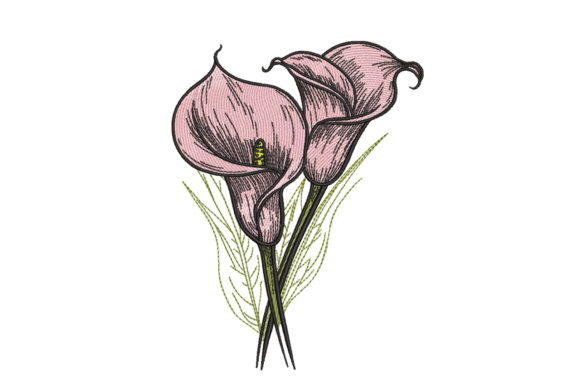
As a designer who’s stitched hundreds of floral motifs for boutique apparel, baby keepsakes, and Etsy shop launches, I opened Pink Calla Lily Duo expecting elegance—and got something more: quiet confidence. It’s not flashy or fussy. Two calla lilies—slightly asymmetrical, stems gently curving—sit side by side in soft, organic proportion. No heavy outlines, no filler petals crowding the frame. Just clean lines, thoughtful negative space, and a botanical calm that reads as intentional, not minimal. This isn’t a design shouting for attention; it’s one that earns it through balance and restraint.
Where It Naturally Lives: Real Projects, Not Just Mockups
Last week, I used Pink Calla Lily Duo on a custom linen tote bag for a local florist’s pop-up stall. The client wanted “timeless but not traditional”—no roses, no daisies, nothing overly sweet. We placed the duo centered on the front panel, sized to 3.8 inches wide. Stitched in matte cotton thread (light rose and warm ivory), it held its shape beautifully against the nubby texture. Customers paused—not to read the logo, but to trace the curve of a petal with their fingers. That’s the quiet power of this design: it invites closeness, not just glance.
It also worked seamlessly on a lightweight cotton baby onesie. Because the motif is open and uncluttered, there’s no risk of stiff, bulky stitching against delicate skin. No dense satin-stitched centers to trap heat or irritate. Just graceful fill stitches and subtle running-stitch stems—enough detail to feel special, light enough to wear all day. For small business owners building a cohesive line—think nursery decor bundles, matching tea towels and pillow covers, or holiday gift sets—Pink Calla Lily Duo becomes a unifying visual thread, not a one-off accent.
What Holds Up—and What Needs Thought
Pink Calla Lily Duo shines on stable, medium-weight fabrics: denim, twill, quilting cotton, midweight linen, and even structured knit blends. On a sweatshirt? Yes—if you use tear-away + cut-away stabilizer combo and reduce stitch density slightly where stems meet fabric grain. On a curved cap front? Proceed with caution: the lower lily’s stem bends inward, and tight curves can distort fine satin-stitch transitions. I’d recommend testing that placement on scrap first—or shifting to a flatter surface like an apron pocket or towel corner.
Dark fabrics reward this design, especially when paired with tonal thread (deep mauve on charcoal, dusty rose on navy). But avoid pairing it with ultra-thin or highly stretchy knits unless you’re using a lightweight water-soluble topper *and* basting the hoop tightly—those slender stems rely on stability. And while the design avoids tiny lettering or micro-details, don’t push it below 2.5 inches wide. At smaller scales, the petal edges soften, losing their signature poise.
Design Integrity Meets Customer Trust
Here’s what matters to buyers—and why Pink Calla Lily Duo delivers: clarity without coldness. It reads instantly as “calla lily,” but doesn’t look clip-art flat. There’s dimension in how the petals layer—subtle shadow fill stitches, gentle curve variation—and that translates directly to perceived value. A customer paying $48 for an embroidered pillow cover isn’t buying thread and fabric. They’re buying intention, care, and a quiet sense of sophistication. This design supports that story. It doesn’t scream “handmade” with frills—it whispers it with precision.
For Etsy sellers and craft fair vendors, that subtlety builds trust. When your product photos show crisp, well-proportioned stitching—even on textured backgrounds—it signals professionalism. No buyer wonders, “Did they rush this?” or “Is this going to pucker after one wash?” Because Pink Calla Lily Duo is built for legibility and longevity: balanced stitch density, logical jump points, and no unnecessary underlay clutter. It’s a design that lets your craftsmanship take center stage—not the file’s quirks.
Practical Designer Notes Before You Stitch
Before committing to your next batch of finished products, here’s what I always do with Pink Calla Lily Duo:
- Test on scrap fabric first—especially if using textured, dark, or stretchy materials. Note how stems hold their curve and whether petal edges lift.
- Check thread color contrast on both light and dark mockups. Light pink on white reads airy; the same thread on black may disappear. Try ivory or heather gray for versatility.
- Review stitch density in your editing software. If adding it to a busy garment (like a patchwork apron), consider reducing fill density by 5–10% to prevent stiffness.
- Confirm hoop size compatibility. While the design fits comfortably in a 4x4 hoop at standard scale, double-check your machine’s maximum width before resizing up for tote bags or down for baby caps.
- Inspect small details at 200% zoom: are stem ends cleanly tapered? Do petal joins flow without gaps or overruns? These nuances define polish.
- Test black-and-white printable mockups—this design relies on shape and rhythm, not color alone. If it reads strong in grayscale, it’ll translate across fabric types.
- Use proper stabilizer: medium-weight cut-away for knits, tear-away for wovens, and always float a lightweight topper for sheers or nap-free surfaces like tea towels.
- Verify licensing before selling finished items or bundling Pink Calla Lily Duo into digital embroidery kits. As a Single Flowers Plants embroidery design, it’s ideal for commercial embroidery—but confirm usage rights match your business model.
At its core, Pink Calla Lily Duo is a design that respects the maker’s time and the buyer’s eye. It doesn’t ask for gimmicks, extra layers, or apologies. It simply works—cleanly, quietly, consistently—across tote bags, baby onesies, kitchen linens, boutique apparel, and personalized gifts. Whether you’re launching your first Etsy embroidery collection or refining a decade-old craft business, this is the kind of design that becomes a trusted staple: never trend-chasing, always grounding.