Butterfly Daisy Bloom Garden
A Soft, Feminine Statement for Boutique Apparel
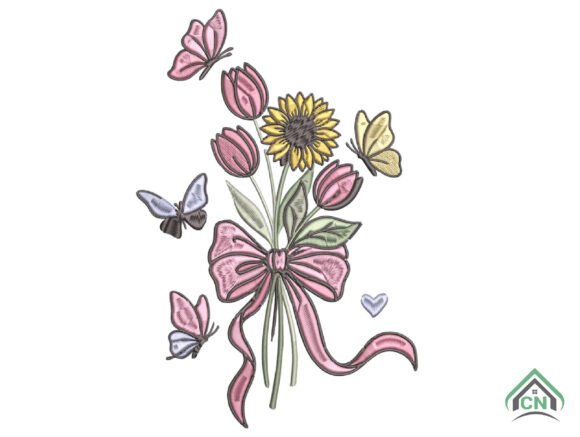
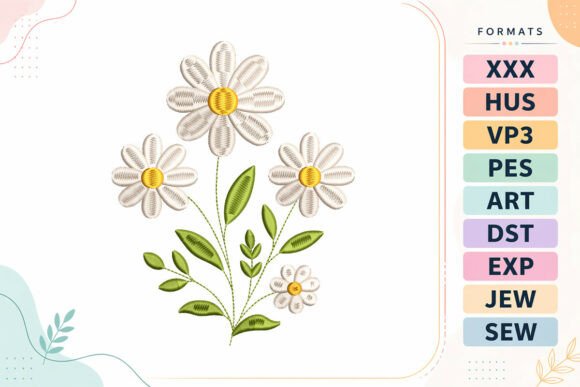
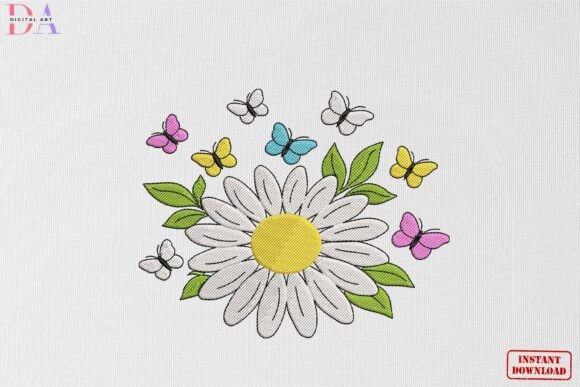
As an embroidery designer who’s developed collections for small clothing brands and Etsy sellers for over a decade, my first impression of Butterfly Daisy Bloom Garden is immediate: it reads as quietly confident—not loud or trendy, but timelessly feminine. The composition centers on a large, open daisy with delicate petal definition and subtle shading, surrounded by three gracefully posed butterflies in varying wing positions and soft color accents. It doesn’t shout; it invites. This isn’t a bold graphic or minimalist icon—it’s a gentle narrative piece, rooted in the Single Flowers Plants category but elevated by its movement and organic rhythm. For boutique apparel, that translates to emotional resonance: customers connect with warmth, care, and handmade intention.
How It Performs Across Real Apparel Projects
When planning a small sweatshirt or hoodie collection—think neutral heather grey, oatmeal, blush, or deep navy—I immediately pictured Butterfly Daisy Bloom Garden on the chest. Its scale works beautifully at 3.5–4.2 inches wide, offering presence without overwhelming. On oversized hoodies, I’d place it slightly off-center for relaxed asymmetry; on fitted crewnecks, centered just below the collarbone adds quiet sophistication.
For sleeve accents? Yes—but with nuance. The butterflies’ wings extend outward, so I’d rotate the design to follow the natural curve of the forearm rather than forcing it upright. On denim jackets, it shines above the left chest pocket, especially when paired with tonal thread (e.g., ecru on light denim, charcoal grey on indigo). And on cozy seasonal layers—think fleece-lined hoodies or brushed cotton tees—the floral softness balances texture without competing.
Tote bags and lifestyle merchandise benefit from its balanced density: enough stitch detail to hold up in print-ready printable mockups, yet clean enough to avoid looking muddy in lifestyle product photos. For Etsy listings, this design supports strong visual consistency across a brand’s feed—especially if you pair it with complementary botanical motifs or hand-lettered tags.
Where to Use It Thoughtfully
- Sweatshirt embroidery: Works best on mid-weight French terry or cotton-blend fleece—avoid ultra-thick loopback fleece unless you reinforce stabilizer.
- Hoodie design placement: Chest is ideal. Avoid the curved back yoke unless you use a flexible cutaway stabilizer and test hoop tension carefully.
- Stretchy fabric: Not recommended for high-stretch knits like jersey without significant digitizing adjustments—stick to stable weaves or low-stretch blends.
- Dark garments: Choose high-contrast thread colors (ivory, pale gold, mint) to ensure petal definition reads clearly. Avoid matching thread too closely to fabric tone.
- Ribbed fabric: Test on ribbed cotton before full production—stitch density may cause puckering if stabilizer isn’t matched precisely to fabric texture.
Design Strengths That Build Brand Trust
What makes Butterfly Daisy Bloom Garden more than just pretty? Its visual consistency. Unlike overly intricate florals that blur at small sizes, this machine embroidery design maintains legibility even when scaled down to 3 inches—critical for chest placements on youth sizes or petite-fit tees. That reliability builds buyer trust: customers recognize your brand’s attention to craft, not just aesthetics.
It also supports a cohesive custom apparel identity. Whether used solo on a cream hoodie or layered subtly behind a small logo on a tote, it carries a unified mood—calm, intentional, nature-rooted. For a small shop product, that kind of quiet distinction helps stand out in crowded feeds and search results. Social media graphics featuring this design feel editorial, not promotional—ideal for Reels showing slow-stitch moments or flat lays styled with dried flowers and linen.
Practical Designer Notes Before You Stitch
Before adding Butterfly Daisy Bloom Garden to your next commercial embroidery run, treat it like any professional digital embroidery file:
- Test on scrap fabric that matches your final garment—especially for nap, stretch, and weight.
- Confirm stabilizer choice: Medium-weight cutaway for stable fabrics; lightweight tear-away with topping for delicate knits.
- Review thread color contrast under natural and artificial light—some pastel threads fade visually on dark backgrounds.
- Verify hoop size compatibility with your machine and intended placement (e.g., cap hoops vs. flat hoops).
- Inspect stitch density in the daisy center and butterfly bodies—dense areas may require slower speeds or additional underlay.
- Compare placement options using a printable mockup—try mirrored, rotated, and cropped versions to see what feels most balanced.
- Check Creative Fabrica product details thoroughly: confirm included formats, licensing scope for finished goods, and whether the embroidery file includes multiple sizes or color-separation guides.
Final Thoughts for Creative Entrepreneurs
If you’re curating a handmade product line that values subtlety over saturation—if your customers choose pieces for how they *feel*, not just how they look—Butterfly Daisy Bloom Garden earns its place. It’s not flashy, but it’s memorable. It doesn’t dominate a garment; it completes it. For Etsy sellers, small clothing brands, and crafters building a signature style, this Embroidery design offers quiet versatility: equally at home on a linen apron, a toddler’s organic-cotton tee, or a limited-run sweatshirt drop.
In a market flooded with generic florals, Butterfly Daisy Bloom Garden stands apart—not by shouting, but by blooming with intention.