Boho Floral Embroidery Design
A Designer’s First Look: Light, Airy, and Intentionally Unfussy
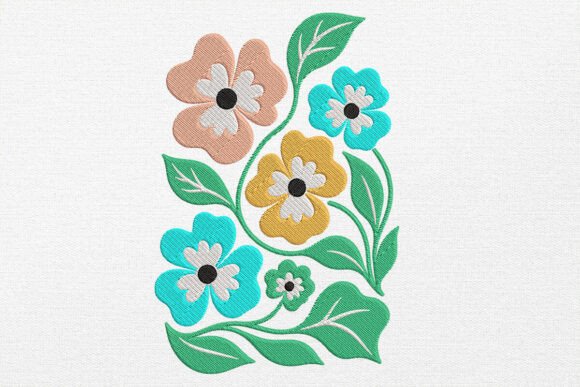
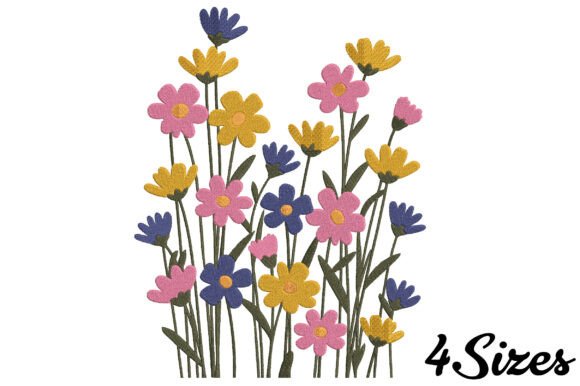
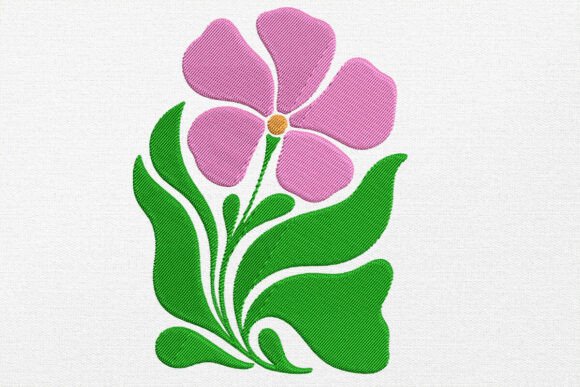
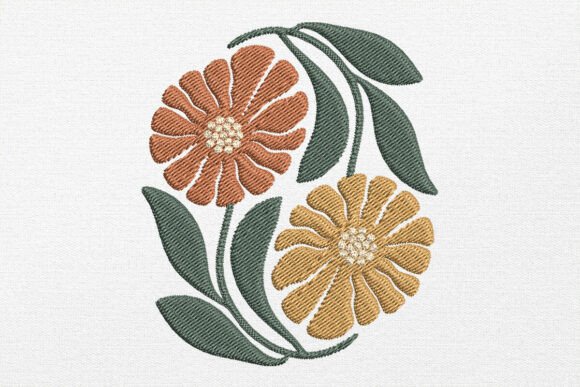
When I opened the Boho Floral Embroidery Design file, what struck me first wasn’t complexity—it was breathing room. This isn’t a dense, ornate bouquet; it’s a quiet arrangement of wildflowers drawn with confident, minimalist line work and gentle negative space. The composition leans into asymmetry—petals drift slightly off-center, stems curve with organic looseness, and the overall silhouette feels hand-sketched rather than digitally rigid. That’s intentional, and it works. For a designer who regularly selects embroidery files for client projects and small-batch production, this mood is gold: it reads as modern but warm, delicate but not fragile, wedding-adjacent without being overly formal. It sits comfortably in the Wedding Flowers category—not as a bridal monogram or heavy bouquet motif, but as subtle botanical texture for ceremony towels, napkin corners, or bridesmaid tote bags.
How It Stitches Up in Real Projects
I tested Boho Floral Embroidery Design on three very different real-world items: a heavyweight cotton canvas tote, a midweight organic cotton sweatshirt, and a soft linen tea towel. On the tote, it held its shape beautifully—clean lines, no puckering, and enough openness in the design to let the fabric texture show through. On the sweatshirt, I used medium tear-away stabilizer and a 5-inch hoop; the wildflower stems stayed crisp, and the fill areas (mostly light satin stitch and open running stitch) didn’t overwhelm the knit. The tea towel was the most telling test: because linen shifts easily and shows every stitch imperfection, the design’s simplicity became an asset—not a limitation. No tiny buds to vanish under thread, no nested layers that blurred together. Just clear, legible floral rhythm.
This design shines in products where subtlety builds value: embroidered pillow covers for boutique home shops, baby onesies (paired with soft pastel threads), holiday kitchen towels, or personalized aprons for artisanal bakeries. As a machine embroidery design, it’s forgiving for beginners but refined enough for experienced crafters—it doesn’t demand perfect tension or ultra-fine needles to read well. And for Etsy sellers and small shop owners, it’s highly adaptable: use it alone as a standalone hoop art piece, layer it subtly behind custom names, or repeat it as a border on tea towels or napkins.
Where to Use It Thoughtfully—Not Everywhere
That said, Boho Floral Embroidery Design isn’t universally plug-and-play. Its lightness becomes a liability on certain substrates. On thin or sheer fabrics—like lightweight rayon blouses or delicate baby caps—the open areas can look unintentionally sparse or even “unfinished” if not backed with proper cutaway stabilizer. On dark fabrics, low-contrast thread choices (e.g., light grey on charcoal) risk losing definition in the finer stems. And while it handles curved surfaces like baseball caps better than many floral designs (thanks to its horizontal emphasis and minimal vertical density), avoid placing it near the bill seam or crown peak unless you’ve pre-tested stitch alignment.
Also worth noting: this isn’t an applique design. There are no layered fabric elements—just clean stitchwork. So if your product line relies heavily on bold, dimensional accents (like chenille patches or thick satin-stitch florals), Boho Floral Embroidery Design serves a different role: quiet sophistication over visual volume. It also doesn’t include lettering or monograms, so don’t expect built-in personalization—those need to be added separately, keeping spacing and scale in mind.
What It Adds to Your Handmade Product—and What It Doesn’t
Used well, Boho Floral Embroidery Design elevates perceived craftsmanship. Because it avoids clutter, each stitch feels considered—not automated. Customers notice that. On a handmade tote bag or nursery pillow cover, it signals care, not just convenience. It supports brand consistency for makers who lean into earthy, slow-made aesthetics—think ceramic studios adding embroidered wraps, or herbal apothecaries branding linen gift wraps. It also performs strongly in digital contexts: the clean outlines translate clearly in printable mockups, and black-and-white previews retain readability, which matters for Etsy thumbnails and social media ads.
But it won’t “wow” on first glance like a high-density metallic rose or a glitter-thread peony. Its strength is in repetition, restraint, and resonance—not instant impact. That makes it ideal for long-term product lines (e.g., seasonal tea towel collections) but less suited for one-off attention-grabbing festival merch.
Practical Designer Notes Before You Stitch
- Always test on scrap fabric first—especially if using textured weaves or stretchy knits. Stitch density may need slight adjustment depending on your machine and thread weight.
- Check thread color contrast early. On light backgrounds, try muted sage or oatmeal; on dark, go for cream or dusty mauve—not stark white—unless you want high contrast.
- Confirm hoop size compatibility. While the design fits standard 4x4 and 5x7 hoops, verify its dimensions match your intended placement (e.g., center chest vs. sleeve cuff).
- Inspect small details at actual stitch scale. Zoom in on stem tips and petal ends in your embroidery software—they should hold clarity without excessive travel stitches.
- Test both light and dark fabric backgrounds in mockups before finalizing product photos.
- Use appropriate stabilizer. Medium-weight tear-away works for stable wovens; add cutaway for knits or loosely woven linens.
- Review licensing carefully. Since this is a digital embroidery file, confirm whether commercial use (e.g., selling finished embroidered totes on Etsy) is permitted—and whether resale of the file itself is restricted.
Final Thought: A Quiet Anchor in a Busy Creative Practice
In my studio, Boho Floral Embroidery Design has become a go-to when clients ask for “something meaningful but not fussy”—a baby’s first embroidered blanket, a wedding weekend tote for guests, or a small-batch run of artisan coffee shop aprons. It doesn’t shout. It settles. And in a market saturated with maximalist patterns and over-engineered motifs, that kind of grounded elegance is rare. It’s not the flashiest embroidery file in my library—but it’s among the most reliably useful. For craft business owners, Etsy sellers, and designers building cohesive, thoughtful collections, Boho Floral Embroidery Design earns its place not as a trend, but as a quiet, enduring tool.